The Complete Guide to Getting Tested: Where to Go, What to Get, and When
The Complete Guide to Getting Tested: Where to Go, What to Get, and When
Getting “tested” sounds like one thing, but it’s really a dozen different habits layered on top of each other: a yearly blood pressure check, a cholesterol panel every few years, a mammogram or colonoscopy on its own separate clock, and STI testing that runs on a completely different rhythm tied to behavior rather than age. It’s no wonder people lose track. This guide brings all of it into one place: the official, legitimate places to go, and a realistic, evidence based timeline for the tests that actually move the needle on catching problems early.
Why Screening Matters More Than It Feels Like It Does
Screening tests are different from diagnostic tests. A diagnostic test is what your doctor orders once something is already bothering you. A screening test is done before anything feels wrong, specifically because many serious conditions such as high blood pressure, high cholesterol, diabetes, most cancers, HIV, and other STIs can sit silently for years while doing damage. By the time symptoms show up, treatment is often harder, longer, and more expensive than it would have been if the condition had been caught on a routine test. That gap between “detectable” and “symptomatic” is exactly what screening is designed to close.
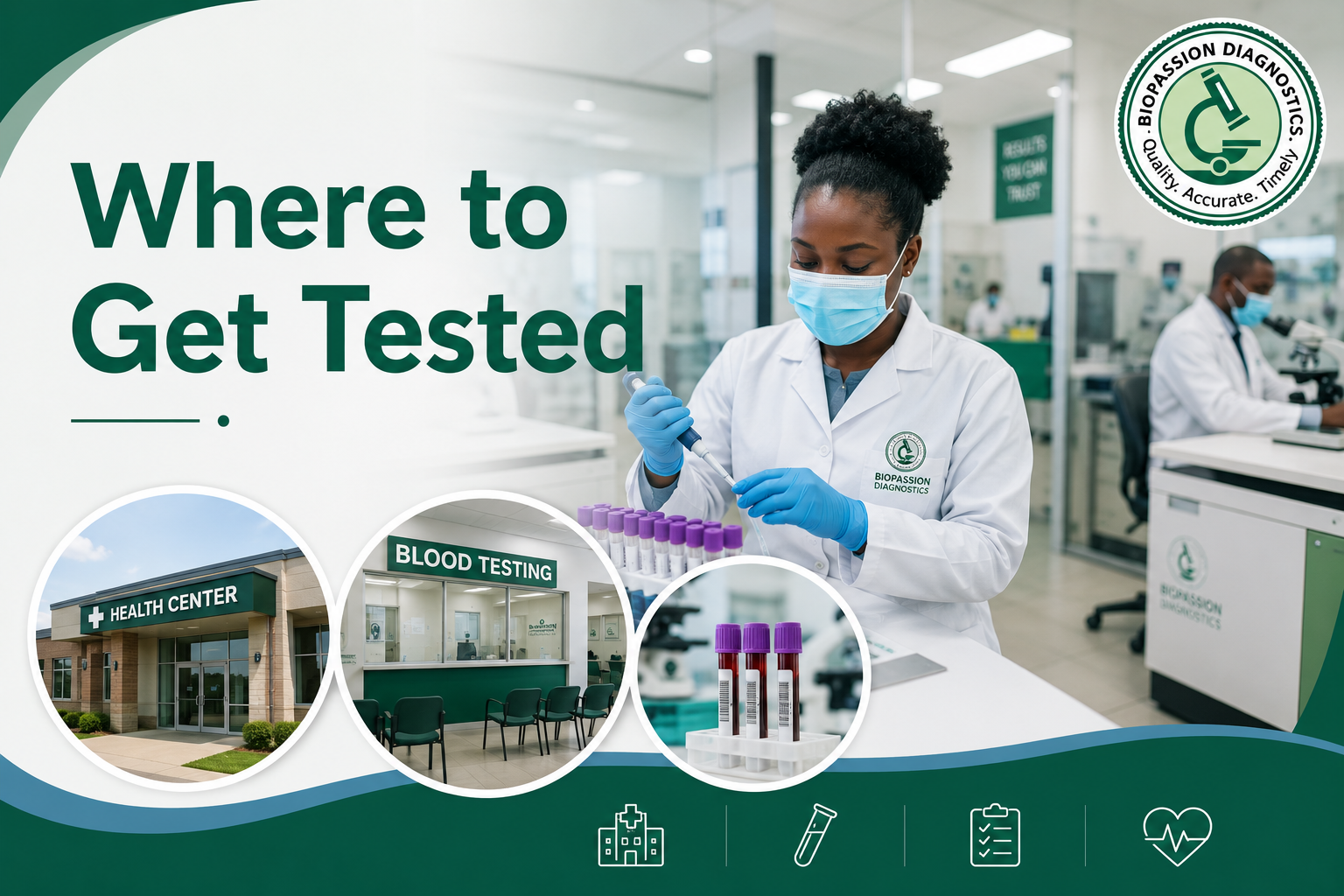
Where to Actually Go: A Breakdown of Legitimate Testing Sites
1. Primary Care Providers
For most general screenings such as bloodwork, cancer screenings, and mental health checks, your primary care doctor or OB-GYN is still the anchor point. They can order labs, interpret results in the context of your full history, and refer you onward if something needs follow up. If you don’t have one, many insurance plans include a “find a provider” tool, and community health centers (below) can also serve as a primary care home even without a private doctor.
2. Federally Qualified Health Centers (FQHCs)
These are community health centers that receive federal funding specifically to serve people regardless of insurance status or income. They’re required by law to see patients regardless of ability to pay, using a sliding fee scale based on income and household size. If your income is at or below the federal poverty level, you qualify for a full discount, and fees scale up gradually above that. Some clinics even accept self declared income if you don’t have pay stubs or documentation on hand, which matters if you’re unhoused or between jobs. You can find one at findahealthcenter.hrsa.gov.
3. Local and County Health Departments
Nearly every county runs a public health clinic, and many operate dedicated sexual health or communicable disease clinics. These typically offer free and confidential HIV/STI testing, and many also distribute free rapid test kits for HIV, hepatitis C, and syphilis that return results in as little as 60 seconds to 20 minutes. Search “[your county] health department STD clinic” or use the CDC locator below.
4. The CDC’s GetTested Tool
Available at gettested.cdc.gov, this lets you search by ZIP code for nearby clinics offering confidential, free, or reduced cost testing, pulling in health department clinics, community health centers, and Title X family planning sites in one search. It’s the single most reliable starting point if you don’t know where else to look.
5. Planned Parenthood
Widely available, walk in friendly at many locations, and set up specifically for reproductive and sexual health: STI and HIV testing, Pap smears, contraception counseling, and related bloodwork, usually on a sliding scale.
6. Commercial Labs (LabCorp, Quest Diagnostics)
These operate collection sites with both walk in and appointment based options, and are typically used when a doctor has already ordered specific labs, though some also offer direct to consumer testing you can order yourself.
7. Urgent Care and Retail Pharmacy Clinics
Useful for speed rather than depth: quick blood pressure checks, basic metabolic panels, and sometimes rapid STI or flu/COVID testing, without needing an appointment.
8. At Home Test Kits
A growing and legitimate category, particularly for HIV self tests, at home colorectal cancer screening kits (FIT or FIT DNA), and STI panels shipped to a lab. At home STI kits typically run in the range of $150 to $170 for a full panel, with individual tests starting lower, and results generally arrive within a week. The one caveat: a positive at home HIV or STI result should be confirmed with a clinical test before starting treatment.
The Full Screening Timeline, Test by Test
Blood Pressure
Check at every medical visit regardless of age; adults should have it measured at least once a year, and more frequently if it runs high or borderline. This is the cheapest, fastest test on this list and arguably the one with the best return on five minutes of your time.
Cholesterol and Lipid Panel
Recommended starting at age 35 for men with normal risk, earlier if there are risk factors like diabetes or a family history of heart disease; women typically begin a bit later unless risk factors are present. Once results are normal, every 4 to 6 years is standard; annually if borderline or being actively managed.
Blood Glucose / Diabetes Screening
Generally begins around age 35 to 40 for average risk adults, or earlier for those who are overweight or have other risk factors like high blood pressure or a family history of diabetes. Repeated every 3 years if results come back normal.
Depression and Anxiety Screening
The USPSTF recommends screening for anxiety disorders in adults, including pregnant and postpartum people, and depression screening carries a similar recommendation as a standard, ongoing part of primary care, not a one time check, but something revisited at routine visits throughout adulthood.
HIV
The USPSTF recommends that clinicians screen all adolescents and adults aged 15 to 65 for HIV, with younger adolescents and older adults screened as well if they’re at increased risk. This recommendation was based on age stratified infection data and patterns of sexual activity in youth, which is why the screening age starts as early as 15. For anyone sexually active with new or multiple partners, more frequent testing, every 3 to 6 months, is commonly advised on top of this baseline.
Other STIs (Chlamydia, Gonorrhea, Syphilis)
There’s no single universal age based schedule here the way there is for HIV; timing follows behavior. If you’re sexually active, especially with multiple partners, testing every 3 to 6 months, or at minimum once a year, is the general public health guidance. It’s worth remembering that most sexually active people will get at least one STI in their lifetime, often without symptoms, which is exactly why testing on a schedule matters more than testing “when something feels off.”
Cervical Cancer Screening
Pap smears every 3 years starting at age 21, or Pap plus HPV co-testing every 5 years starting at age 30, continuing through age 65. As of January 2026, HRSA guidelines also give women ages 30 to 65 at average risk the option to self collect their own samples for HPV testing, though this option becomes effective for insurance plan years starting in 2027, so it’s worth asking your provider whether it’s available yet in your specific plan.
Breast Cancer Screening (Mammography)
Current USPSTF guidance recommends women aged 40 to 74 get a mammogram every two years. A 2026 HRSA expansion now also requires health plans to cover all follow up imaging and pathology at no cost, a significant change for anyone whose first mammogram comes back inconclusive or who has dense breast tissue requiring additional imaging.
Colorectal Cancer Screening
Starts at age 45 for average risk adults and continues through 75. Options include a colonoscopy every 10 years or an annual at home stool based test (FIT or FIT DNA); both are considered valid, evidence backed choices, and which one fits depends mostly on personal preference and access.
Lung Cancer Screening
Low dose CT screening is recommended for adults aged 50 to 80 with a 20 pack year smoking history who currently smoke or quit within the past 15 years. This is a more targeted, risk based screening rather than something recommended for the general population.
Abdominal Aortic Aneurysm
A one time ultrasound is recommended for men aged 65 to 75 who have ever smoked, a narrow but important recommendation, since AAA is typically symptomless until it becomes an emergency.
Cost: What You Should Actually Expect to Pay
The financial picture has genuinely improved in the past two years. A January 2026 Supreme Court ruling in Kennedy v. Braidwood preserved zero cost access to USPSTF recommended preventive screenings for more than 150 million Americans, meaning that if a screening carries an “A” or “B” rating, which covers nearly everything listed above, most insurance plans are required to cover it with no copay or deductible. If you’re uninsured, FQHCs and county health departments remain the most reliable route to free or sliding scale testing, and organizations like Planned Parenthood offer similar accommodations. For STI testing specifically, costs at private providers can range from $0 to around $250 depending on the panel, but free or low cost options are consistently available through health departments, community health centers, and Title X clinics, so cost should rarely be the reason someone skips testing.
Putting It Together: A Simple Way to Think About It
You don’t need to memorize every interval above. A workable mental model is this: annual (blood pressure, and STI testing if you’re sexually active with new or multiple partners), every few years (cholesterol, diabetes screening, cervical cancer screening), and age triggered (mammograms starting at 40, colorectal screening starting at 45, lung screening if you have a smoking history, HIV screening as a one time baseline followed by risk based repeats). Layer a yearly check in with a primary care provider or community health center on top of that, and you’ve covered the large majority of what actually catches disease early.
If you’re not sure where to start, two links do most of the work: findahealthcenter.hrsa.gov for a low cost or free primary care home, and gettested.cdc.gov for STI, HIV, and hepatitis testing near you. Everything else follows from having one of those two doors open.
Your Next Step
Don’t let this become another article you read and close. Pick one thing from this guide and do it this week: book that overdue mammogram or colonoscopy, look up your nearest FQHC, or search gettested.cdc.gov if it’s been more than a year since your last STI check. Screening only works if it actually happens, and the best time to schedule it is right now, while it’s still on your mind. Your future self will thank you for the five minutes it takes to make the call or book the appointment.
Book your medical test at Biopassion Diagnostics
Contact Us +254704150555
Email – biopassiondiagnostics@gmail.com