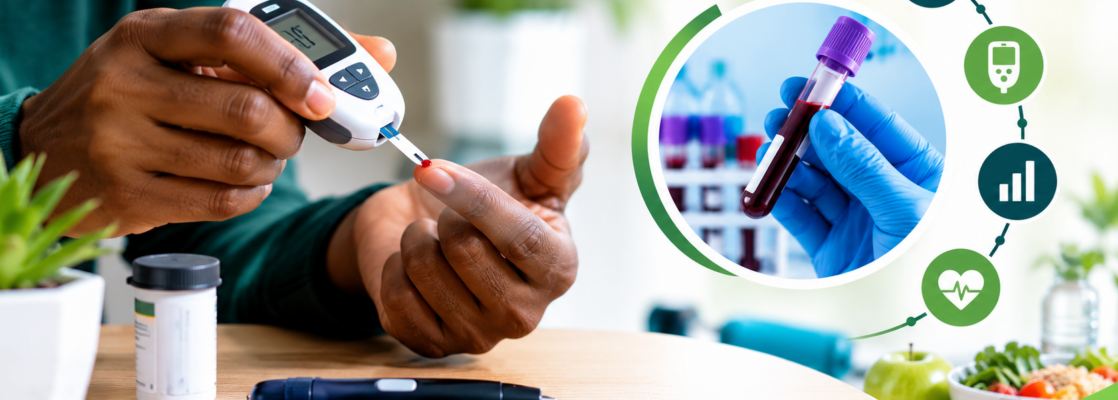
You eat, you move, you sleep, and all day long your body is quietly managing one critical thing: the sugar in your blood. When that balance slips, you may feel nothing at all for years. That is exactly why a simple blood glucose test is one of the most valuable checks you can do for your health.
This guide explains what blood glucose is, why it matters, which lab tests measure it, how to prepare, what your results mean and where to get tested in Nairobi, Kenya.
What Is Blood Glucose?
Blood glucose, often called blood sugar, is the main sugar found in your blood. It comes from the food you eat, especially carbohydrates such as ugali, rice, chapati, bread, potatoes, fruit and sweet drinks. Your body also makes glucose in the liver.
Glucose is your body’s main fuel. Your brain, muscles and organs depend on it for energy. A hormone called insulin, made by the pancreas, moves glucose from the blood into your cells. When this system works well, your blood glucose stays within a healthy range. When it does not, glucose builds up in the blood (high blood glucose) or drops too low (low blood glucose).
Why Blood Glucose Testing Matters
High blood glucose over a long time is the hallmark of diabetes, a condition that is rising across Kenya and the world. The difficult truth is that many people with raised blood sugar have no obvious symptoms at first. Waiting for symptoms often means waiting for damage.
Uncontrolled blood glucose can affect:
- The heart and blood vessels, raising the risk of heart attack and stroke
- The kidneys, leading to kidney disease
- The eyes, causing blurred vision and, in time, sight loss
- The nerves, causing tingling, numbness and foot problems
- Healing ability and resistance to infections
The good news: when blood glucose problems are caught early, especially at the prediabetes stage, they can often be managed or even reversed with lifestyle changes and proper medical guidance. A lab test is how you find out.
Signs You Should Get Your Blood Glucose Checked
If you notice any of the following, book a test:
- Frequent urination, especially at night
- Constant thirst
- Unexplained tiredness
- Blurred vision
- Increased hunger
- Unexplained weight loss
- Slow healing cuts or wounds
- Frequent infections, including skin or yeast infections
- Tingling or numbness in the hands or feet
- Dark, velvety skin patches around the neck or armpits
Remember, you can have high blood glucose and feel completely fine. Screening matters even when you have no symptoms.
Who Should Be Tested?
You should talk to your doctor or lab about regular glucose testing if you:
- Are 35 years or older, or younger with risk factors
- Are overweight or carry extra weight around the waist
- Have a parent, brother or sister with diabetes
- Have high blood pressure or abnormal cholesterol
- Live a mostly inactive lifestyle
- Had diabetes during pregnancy (gestational diabetes) or delivered a baby over 4 kg
- Have polycystic ovary syndrome (PCOS)
- Are pregnant (screening is routinely done during pregnancy)
Types of Blood Glucose Lab Tests
There is more than one way to check blood glucose. Each test answers a slightly different question.
1. Fasting Blood Glucose (FBG) or Fasting Plasma Glucose
Measures your blood sugar after you have not eaten for at least 8 hours, usually overnight. It is the most common screening test and gives a clear baseline of how your body manages glucose without food.
2. Random Blood Glucose (RBG)
Measured at any time of day, regardless of when you last ate. It is useful when you have symptoms and need a quick answer.
3. HbA1c (Glycated Haemoglobin)
Shows your average blood glucose over the past 2 to 3 months. No fasting is needed. Doctors use it to diagnose diabetes and to check how well treatment is working. Think of it as your blood sugar report card for the season, not just the day.
4. Oral Glucose Tolerance Test (OGTT)
You give a fasting sample, drink a measured sugary solution, then have blood taken again after a set time (commonly 2 hours). It shows how efficiently your body clears glucose and is widely used to screen for gestational diabetes and to confirm borderline results.
5. Postprandial Glucose (2 Hour After Meal)
Measures your glucose about 2 hours after eating, showing how your body handles a normal meal.
6. Other Helpful Tests
Depending on your situation, your doctor may also request urine glucose or ketones, insulin levels, a lipid profile, kidney function tests and a urine albumin test. These look at related risks and complications.
Understanding Your Blood Glucose Results
Results are reported in mmol/L (used in Kenya) or mg/dL. Ranges below are commonly used guides for adults. Your lab report and doctor will interpret your results in your personal context.
| Test | Normal | Prediabetes | Diabetes range |
|---|---|---|---|
| Fasting glucose | Below 5.6 mmol/L (100 mg/dL) | 5.6 to 6.9 mmol/L (100 to 125 mg/dL) | 7.0 mmol/L (126 mg/dL) or higher |
| OGTT, 2 hour value | Below 7.8 mmol/L (140 mg/dL) | 7.8 to 11.0 mmol/L (140 to 199 mg/dL) | 11.1 mmol/L (200 mg/dL) or higher |
| HbA1c | Below 5.7% | 5.7% to 6.4% | 6.5% or higher |
| Random glucose | Not used alone to rule diabetes in or out | 11.1 mmol/L (200 mg/dL) or higher with symptoms |
Low blood glucose (hypoglycaemia) is generally a reading below 3.9 mmol/L (70 mg/dL). It can cause shaking, sweating, dizziness, confusion and fast heartbeat, and needs prompt attention.
A single abnormal result does not automatically mean you have diabetes. Doctors usually confirm with a repeat test or a second type of test. Never start or stop medication based on a result alone.
How to Prepare for Your Blood Glucose Test
Good preparation gives you reliable results.
- Fasting tests: Do not eat or drink anything except plain water for at least 8 hours before the test. Book a morning slot so most of the fast happens while you sleep.
- HbA1c: No fasting needed.
- OGTT: Eat normally for the days before, fast overnight, and expect to stay at the lab for about 2 hours. Avoid smoking, exercise and snacking during the test.
- Medication: Tell the lab and your doctor about everything you take, including steroids, diuretics and diabetes medicines. Do not stop any medication unless your doctor tells you to.
- Stay hydrated with plain water, which also makes blood collection easier.
- Avoid sugary drinks, alcohol and heavy exercise before your test, as they can affect results.
- Wear a short sleeved or loose top for easy access to your arm.
What to Expect During the Test
It is quick and straightforward. A trained phlebotomist cleans the skin on your arm, draws a small blood sample from a vein, and sends it to the laboratory for analysis. The collection usually takes only a few minutes. You may feel a brief pinch, and you can return to normal activities right away. Eat something after a fasting test.
How Often Should You Test?
- No risk factors: Screening from around age 35, then at least every 3 years if normal
- Prediabetes or high risk: Every 6 to 12 months, or as advised by your doctor
- Living with diabetes: As recommended by your healthcare provider, with HbA1c often checked every 3 to 6 months
- Pregnancy: Screening as guided by your antenatal care provider
Simple Ways to Support Healthy Blood Glucose
- Fill half your plate with vegetables and choose whole grains, beans and lentils more often
- Cut back on sugary drinks, sodas and sweet snacks
- Walk briskly or exercise for at least 30 minutes on most days
- Keep a healthy weight, especially around the waist
- Sleep 7 to 9 hours and manage stress
- Avoid smoking and limit alcohol
- Keep up with regular check ups and lab tests
Where to Get a Blood Glucose Test in Nairobi, Kenya
You can get tested at accredited medical laboratories, hospitals and clinics. When choosing where to test, look for:
- Accreditation and qualified staff: Choose a laboratory registered with the Kenya Medical Laboratory Technicians and Technologists Board (KMLTTB)
- Accurate, reliable results from well maintained equipment
- Fast turnaround time so you can act on your results quickly
- Convenient sample collection that fits your schedule
- Privacy and respectful service
- A wide test menu so you can combine glucose with other wellness checks
Biopassion Diagnostics is a patient centered medical laboratory in Nairobi, Kenya, offering wellness screening and specialized laboratory services for individuals, families, clinicians and organizations, with timely results and convenient sample collection.
Frequently Asked Questions
Do I need to fast for a blood glucose test? For a fasting glucose test and an OGTT, yes, for at least 8 hours. For HbA1c and random glucose, no fasting is required.
Can I drink water before a fasting test? Yes. Plain water is fine and helps.
Which is better, HbA1c or fasting glucose? Neither is better in every case. Fasting glucose shows your level right now, while HbA1c shows your 2 to 3 month average. Doctors often use them together.
What is a normal blood sugar level? For adults, a fasting level below 5.6 mmol/L (100 mg/dL) is generally considered normal.
Can stress or illness affect my result? Yes. Illness, infection, stress and some medicines can temporarily raise blood glucose.
Is prediabetes reversible? Often, yes. Healthier eating, regular activity, weight management and medical follow up can bring glucose back to a healthy range.
How long do results take? Many glucose tests are ready the same day. Confirm timelines with your laboratory when you book.
Can I do a glucose test without a doctor’s request? Many laboratories offer self referred wellness screening. Contact the lab to confirm how to book.
Do Not Wait for Symptoms. Know Your Numbers Today.
A blood glucose test takes only minutes, yet it can protect you from years of complications. Whether you are checking your health for the first time, following up on a family history, or monitoring a condition, accurate lab results are your first step.
Book Your Blood Glucose Test with Biopassion Diagnostics
Call or WhatsApp: +254 704 150 555 (0704 150 555) Visit: www.biopassiondiagnostics.com
Timely results. Convenient sample collection. Care that puts you first.
Biopassion Diagnostics: Your Health IS OUR PASSION