Your complete guide to understanding joint pain, the different types of arthritis, and the laboratory tests that help find answers early. By Biopassion Diagnostics, Your Health IS OUR PASSION.
Why Arthritis Deserves Your Attention
Morning stiffness that takes a long time to ease. Swollen knuckles. A knee that aches on the stairs. A big toe that suddenly becomes red, hot and unbearable overnight. Many people brush these signs off as “just age” or “too much work,” and keep going until the pain starts to limit daily life.
Arthritis is not one disease. It is an umbrella term for more than 100 conditions that cause pain, swelling and stiffness in the joints. According to the World Health Organization, around 528 million people worldwide were living with osteoarthritis in 2019, and about 18 million people were living with rheumatoid arthritis. It affects men and women, the young and the old, office workers and farmers alike.
The good news is that early diagnosis changes the story. Many forms of arthritis can be controlled, and joint damage can often be slowed or prevented, when the right condition is identified early. That is where careful clinical assessment and accurate laboratory testing come in.
What Is Arthritis?
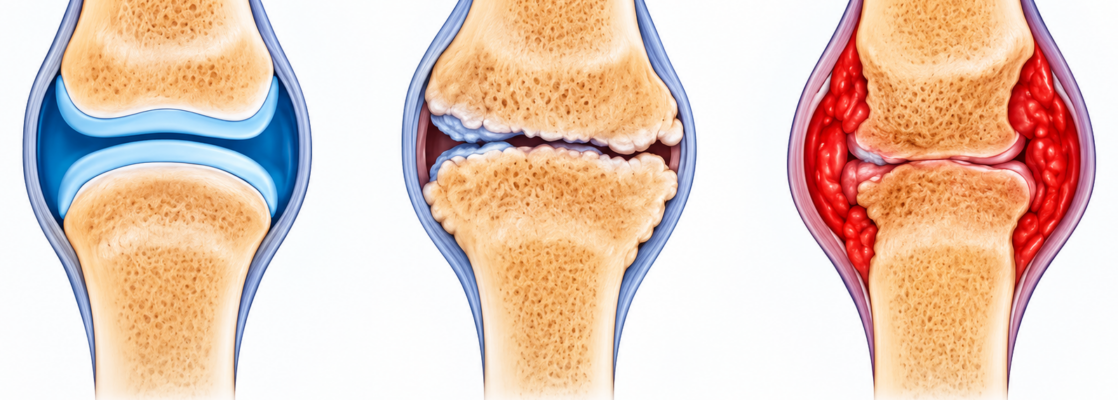
A joint is where two bones meet, cushioned by cartilage and lined by a thin tissue called the synovium, which produces a lubricating fluid. Arthritis happens when something disturbs this system. Depending on the type, the cause may be wear and tear of cartilage, an immune system that attacks the joint lining, a build up of uric acid crystals, or an infection.
The common thread is inflammation or damage inside the joint, leading to pain, swelling, stiffness and reduced movement.
Common Types of Arthritis
Osteoarthritis (OA)
The most common type. Cartilage gradually thins and the underlying bone changes. It typically affects the knees, hips, hands and spine. Risk factors include age, previous joint injury, excess body weight, repetitive joint stress and family history. Pain usually worsens with activity and improves with rest, and morning stiffness tends to last less than 30 minutes.
Rheumatoid Arthritis (RA)
An autoimmune condition in which the body’s own immune system attacks the joint lining. It often affects the small joints of the hands and feet on both sides of the body, and can begin in early or middle adult life. Morning stiffness commonly lasts longer than an hour. RA can also cause fatigue, low grade fever and weight loss, and can affect the eyes, lungs, heart and blood vessels if left uncontrolled.
Gout
Caused by high levels of uric acid in the blood, which can form sharp crystals in a joint. Attacks are sudden and severe, often in the big toe, and may be triggered by alcohol, red meat, sugary drinks, dehydration, certain medicines or kidney problems.
Psoriatic Arthritis
Occurs in some people with the skin condition psoriasis, and sometimes joint symptoms appear before the skin changes are noticed. It can cause swollen “sausage like” fingers or toes, nail changes and back stiffness.
Ankylosing Spondylitis and Related Spinal Arthritis
An inflammatory condition that mainly affects the spine and the joints of the pelvis. It often starts in young adults, with lower back pain and stiffness that is worse after rest and improves with movement.
Juvenile Idiopathic Arthritis (JIA)
Arthritis that begins in children under 16 years. Parents may notice limping, reluctance to use a limb, persistent joint swelling or unexplained fevers with rashes.
Septic (Infectious) Arthritis
A joint infection caused by bacteria, and occasionally other germs. It usually presents as a single, very painful, hot, swollen joint, often with fever. This is a medical emergency and needs urgent care to protect the joint.
Other Forms
Arthritis can also accompany conditions such as lupus, certain viral infections, and reactive arthritis that follows an infection elsewhere in the body, including some sexually transmitted infections.
Warning Signs and Symptoms
See a healthcare professional if you notice any of the following for more than a few weeks:
- Joint pain, tenderness or swelling
- Stiffness, especially in the morning or after sitting for long
- Warmth or redness around a joint
- Reduced range of movement
- Fatigue, low grade fever or unexplained weight loss together with joint symptoms
- Symmetrical joint involvement, for example both hands
- Skin rash, scaly patches or nail changes together with joint pain
- Eye redness or pain along with back or joint pain
Seek urgent care if a single joint becomes suddenly hot, red, very swollen and painful, especially with fever, because this could be an infection or an acute gout attack.
Who Is at Higher Risk?
- Age: Risk of osteoarthritis rises with age, though arthritis can affect children and young adults
- Sex: Rheumatoid arthritis and lupus are more common in women, while gout is more common in men
- Family history: Genes can influence risk for RA, ankylosing spondylitis and gout
- Excess weight: Extra load on the knees and hips, and higher uric acid levels
- Previous joint injury: Sports injuries, fractures and repetitive strain
- Smoking: A known risk factor for developing RA and for more severe disease
- Diet and alcohol: Particularly relevant for gout
- Chronic conditions: Kidney disease, high blood pressure, diabetes and psoriasis
How Is Arthritis Diagnosed?
No single test diagnoses every type of arthritis. Doctors combine four things: your history and symptoms, a physical examination of the joints, laboratory tests, and imaging. Laboratory testing is especially valuable because it can show inflammation, reveal autoimmune activity, measure uric acid, and rule out other causes of joint pain. It also provides the baseline needed to start treatment safely and track how well it is working.
Laboratory Tests Used in Arthritis Assessment
1. Full Blood Count (FBC)
Shows your red cells, white cells and platelets. Anaemia is common in long standing inflammatory arthritis, and a raised white cell count can point to infection. An FBC is also a routine safety check before and during many arthritis medicines.
2. Erythrocyte Sedimentation Rate (ESR)
A general marker of inflammation in the body. A high ESR supports the presence of inflammation, but it does not tell us the cause, and it can be raised by infections, anaemia, pregnancy and age.
3. C Reactive Protein (CRP)
Another marker of inflammation that rises and falls more quickly than ESR. Doctors often use ESR and CRP together to assess disease activity and response to treatment.
4. Rheumatoid Factor (RF)
An antibody found in many, but not all, people with rheumatoid arthritis. A positive result can also occur in other conditions and in some healthy people, so it must be interpreted alongside symptoms.
5. Anti CCP Antibody (Cyclic Citrullinated Peptide)
A highly specific marker for rheumatoid arthritis. It can appear years before joint damage shows on imaging, which makes it very useful for early diagnosis and for predicting how aggressive the disease may be.
6. Antinuclear Antibody (ANA)
Helps assess for autoimmune conditions such as lupus. A positive ANA does not confirm lupus on its own, but guides further testing.
7. Serum Uric Acid
Central to gout assessment and monitoring. Be aware that uric acid can appear normal during an acute attack, so doctors may repeat the test after the flare settles. The definitive test for gout is identifying uric acid crystals in joint fluid.
8. HLA-B27
A genetic marker associated with ankylosing spondylitis and related spinal arthritis. It is present in some healthy people too, so it supports, rather than proves, a diagnosis.
9. Synovial (Joint) Fluid Analysis
When a joint is swollen, a doctor may draw a small sample of fluid. The laboratory examines it for crystals (gout), bacteria (septic arthritis), and signs of inflammation. This is the key test when infection is suspected.
10. Kidney and Liver Function Tests
Important for safety. Many arthritis medicines, including anti inflammatory painkillers and disease modifying drugs, are processed by the liver and kidneys. Kidney disease can also raise uric acid and contribute to gout.
11. Vitamin D and Bone Health Markers
Low vitamin D is common and relevant to bone and muscle health, especially in people on long term steroid treatment or with inflammatory arthritis.
12. Infection Screening Before Certain Treatments
Before starting stronger immune modifying medicines, doctors commonly screen for hepatitis B, hepatitis C and tuberculosis, because these infections can flare when the immune system is suppressed. Where reactive arthritis is suspected, testing for related infections may also be advised.
What About Imaging?
X rays show joint space narrowing and bone changes, ultrasound can detect early inflammation and fluid, and MRI reveals soft tissue and early spinal changes. These are done at imaging centres and complement laboratory results.
Understanding Your Results: Important Points
- A normal result does not always mean no arthritis. Some people with early or specific types of arthritis have normal ESR, CRP or negative RF at first.
- A positive result does not always mean disease. Several markers can be mildly positive in healthy people or other conditions.
- Results must be read with symptoms and examination. Your doctor or rheumatology specialist puts the full picture together.
- Repeat testing is normal. Tracking trends over time is often more informative than a single reading.
Treatment and Management: What Can Be Done
Treatment depends on the type of arthritis, but the goals are the same: reduce pain, control inflammation, protect the joints and keep you active.
- Medication: Pain relievers, anti inflammatory medicines, disease modifying drugs for autoimmune types, and urate lowering medicines for gout, all prescribed and monitored by a doctor
- Physiotherapy and exercise: Low impact activity such as walking, swimming and cycling, plus strengthening and flexibility exercises
- Weight management: Even modest weight loss reduces load on the knees and hips and lowers gout risk
- Diet: A balanced diet rich in vegetables, fruit, whole grains and healthy fats. For gout, limit alcohol, sugary drinks and excess red meat and organ meats, and stay well hydrated
- Stop smoking: It improves outcomes, particularly in rheumatoid arthritis
- Joint protection and assistive devices: Supports, braces and ergonomic adjustments at work
- Surgery: For advanced joint damage, procedures including joint replacement may restore function
Please avoid self medicating with painkillers for long periods, or using unverified herbal remedies, without medical advice. Some can harm the stomach, kidneys and liver.
Prevention and Daily Habits for Healthier Joints
- Stay physically active and avoid long periods of sitting
- Maintain a healthy body weight
- Protect your joints during sport and heavy lifting
- Do not smoke and keep alcohol low
- Manage blood pressure, diabetes and kidney health
- Get regular check ups, especially if arthritis runs in your family
- Act early on persistent joint symptoms rather than waiting for them to worsen
When Should You Get Tested?
Consider speaking to a doctor and getting appropriate laboratory tests if:
- Joint pain or swelling lasts longer than two to three weeks
- Morning stiffness lasts more than 30 minutes
- More than one joint is affected, or both sides of the body are involved
- You have a family history of rheumatoid arthritis, gout, psoriasis or autoimmune disease
- You have repeated gout like attacks or known high uric acid
- You are on long term arthritis medicines and need safety monitoring
- Your child has persistent limping, joint swelling or unexplained fevers
Get Tested with Biopassion Diagnostics
Waiting in pain is not a plan. Early answers help you and your doctor choose the right treatment sooner.
Biopassion Diagnostics is a patient centred medical laboratory in Nairobi, Kenya, accredited by KMLTTB, offering accurate results, timely turnaround and convenient sample collection for individuals, families, clinicians and organizations.
Book your arthritis related tests today:
- Call or WhatsApp: +254 704 150 555 (0704 150 555)
Bring any request form from your doctor, or ask our team to guide you on which tests are commonly used for your symptoms. Employers and clinics can also contact us about workplace wellness screening packages.
Your Health IS OUR PASSION.
Frequently Asked Questions
Is arthritis only a disease of old age? No. Osteoarthritis becomes more common with age, but rheumatoid arthritis, psoriatic arthritis, ankylosing spondylitis and juvenile arthritis can begin in young adults and children.
Can a blood test alone diagnose arthritis? Usually not. Blood tests support the diagnosis alongside your symptoms, examination and imaging.
What is the best test for rheumatoid arthritis? Rheumatoid factor and anti CCP antibody, together with ESR and CRP, are the commonly used blood tests. Your doctor will decide what suits your situation.
Can I have arthritis with normal blood tests? Yes. Osteoarthritis typically shows normal blood tests, and early inflammatory arthritis can also look normal at first.
Is gout the same as arthritis? Gout is a type of inflammatory arthritis caused by uric acid crystals in the joint.
Can arthritis be cured? Most types cannot be fully cured, but many can be controlled very well, especially when diagnosed early, allowing people to live active lives.
Does diet really matter? It can. Diet does not cause most forms of arthritis, but weight, alcohol and certain foods strongly influence gout and joint load.
Do I need to fast before arthritis tests? Most arthritis related tests do not require fasting, but requirements can vary. Confirm with the laboratory when booking.