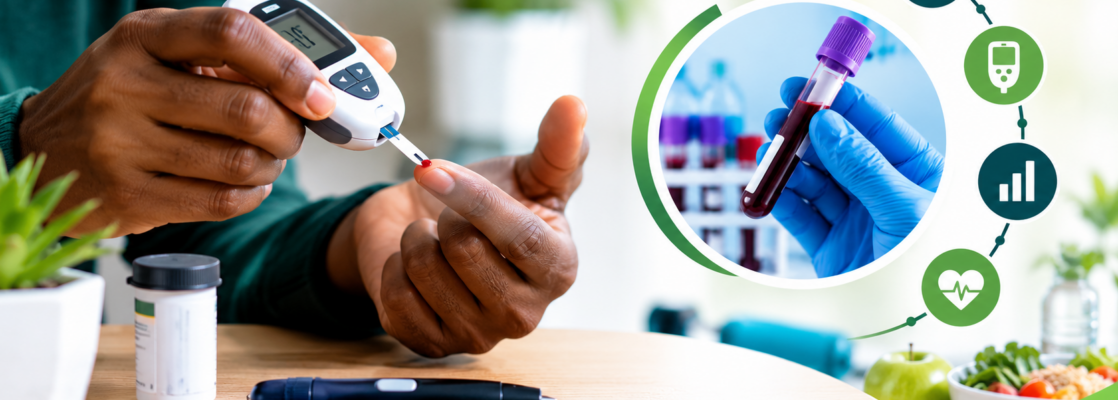
Diabetes often starts quietly. Learn the warning signs, who is at risk, and the simple blood tests that can catch it early.
By Biopassion Diagnostics, Your Health IS OUR PASSION.
The Silent Condition Many People Do Not Know They Have
You have been more tired than usual lately. You keep running to the bathroom, drinking more water than you ever did, and a small cut on your foot seems to be taking forever to heal. It is easy to blame stress, long work hours or the weather.
But sometimes these everyday complaints are your body’s way of waving a flag.
According to the International Diabetes Federation, roughly 589 million adults around the world were living with diabetes in 2024, and about four in ten of them did not know it. In many parts of Africa, the share of people who are undiagnosed is believed to be even higher. The reason is simple: in its early stages, especially Type 2 diabetes, the condition can cause mild symptoms or none at all, and people adjust to feeling unwell without realising something is wrong.
The encouraging news is that when diabetes is found early, it can be managed well, and in the case of prediabetes it can often be slowed or even reversed. Knowing the signs, and getting tested, makes all the difference.
What Is Diabetes?
Diabetes is a long term condition in which the body cannot properly control the level of sugar (glucose) in the blood. Glucose comes from the food we eat and is our body’s main fuel. To move glucose from the blood into our cells, the body needs a hormone called insulin, made by the pancreas.
Diabetes develops when the pancreas does not make enough insulin, or when the body cannot use insulin properly, or both. Glucose then builds up in the blood instead of fuelling the cells, and over time, high blood sugar damages blood vessels, nerves, eyes, kidneys and the heart.
The Main Types
- Type 1 diabetes: An autoimmune condition in which the body destroys insulin producing cells. It often appears in childhood or young adulthood, and symptoms usually develop quickly
- Type 2 diabetes: The most common form. The body becomes resistant to insulin or does not make enough. It develops slowly and is strongly linked to weight, inactivity, diet and family history
- Gestational diabetes: High blood sugar first detected during pregnancy, which usually settles after delivery but raises later risk of Type 2 diabetes for the mother and affects the baby’s health if untreated
- Prediabetes: Blood sugar higher than normal but not yet in the diabetes range. This is a crucial window for action
The Early Warning Signs
Not everyone has every sign, and some people have none. But if you notice one or more of the following, especially if they persist, do not ignore them.
1. Frequent Urination
When blood sugar is high, the kidneys work overtime to filter out the extra glucose, pulling water with it. You may find yourself passing urine more often, and waking at night to do so.
2. Excessive Thirst and Dry Mouth
All that lost fluid leaves you dehydrated. You may feel constantly thirsty no matter how much you drink, with a dry mouth and dry, itchy skin.
3. Extreme Hunger
If your cells cannot access glucose, your body signals that it needs more fuel. You may feel hungry soon after eating, even when you have eaten well.
4. Unexplained Weight Loss
Losing weight without trying is a red flag. When the body cannot use glucose for energy, it begins to break down fat and muscle. This is especially common in Type 1 diabetes, but can also occur in Type 2.
5. Unusual Tiredness and Fatigue
When glucose is stuck in the bloodstream, your cells are starved of energy. Persistent exhaustion that sleep does not fix deserves attention.
6. Blurred Vision
High blood sugar can cause the lens of the eye to swell, temporarily blurring your sight. Vision that changes from day to day should prompt a check, as long term high sugar can permanently damage the eyes.
7. Slow Healing Cuts, Sores and Bruises
High glucose affects circulation and weakens the body’s ability to heal. Wounds on the feet, in particular, that heal slowly should never be brushed aside.
8. Frequent Infections
Sugar rich blood and weakened defences create a good environment for germs. Recurrent skin infections, urinary tract infections, gum disease, and vaginal or oral thrush can all be signs.
9. Tingling, Numbness or Burning in the Hands and Feet
High blood sugar can injure nerves over time, causing pins and needles, numbness or burning, often starting in the feet.
10. Dark, Velvety Patches of Skin
Darkened, thickened skin around the neck, armpits or groin, known as acanthosis nigricans, is often linked to insulin resistance and is an important early clue, particularly in people who are overweight.
11. Mood Changes and Irritability
Swings in blood sugar can affect concentration and mood, leaving some people more irritable, anxious or unable to focus.
12. Sexual Health Changes
In men, erectile difficulties can be an early sign of diabetes related nerve and blood vessel changes. In women, repeated vaginal infections and menstrual irregularities linked with insulin resistance, such as in polycystic ovary syndrome, can also be clues.
Signs in Children
Parents should watch for new bedwetting in a child who was previously dry, increased thirst and urination, sudden weight loss, unusual tiredness, irritability, and fruity smelling breath. Symptoms in Type 1 diabetes can come on over days or weeks.
When It Becomes an Emergency
Very high blood sugar, especially in Type 1 diabetes, can lead to a dangerous condition called diabetic ketoacidosis. Seek emergency medical care immediately if someone has:
- Nausea, vomiting or severe stomach pain
- Fast, deep breathing
- Fruity smelling breath
- Extreme thirst with drowsiness or confusion
- Loss of consciousness
Very low blood sugar in people already treated for diabetes is also an emergency. Signs include sweating, shaking, sudden hunger, confusion and fainting.
Who Is at Higher Risk?
You may be at greater risk of Type 2 diabetes if you:
- Are overweight or carry extra weight around the waist
- Have a parent, brother or sister with diabetes
- Are physically inactive or have a desk based lifestyle
- Are over 35 years old (although it is increasingly seen in younger adults)
- Have high blood pressure or abnormal cholesterol
- Have had gestational diabetes or delivered a baby weighing over 4 kg
- Have polycystic ovary syndrome
- Have been told you have prediabetes
- Eat a diet high in sugary drinks, refined carbohydrates and processed foods
- Smoke or drink alcohol heavily
If any of these apply to you, regular screening is wise even if you feel perfectly well.
Why Early Detection Matters
Left unchecked, high blood sugar quietly damages the body over years. Possible complications include:
- Heart attack and stroke
- Kidney disease and kidney failure
- Eye damage and vision loss
- Nerve damage and foot ulcers, sometimes leading to amputation
- Increased infections and slow wound healing
- Pregnancy complications
The longer blood sugar stays high, the greater the risk. Catching diabetes or prediabetes early gives you the chance to protect your organs and keep living a full, active life.
How Diabetes Is Diagnosed: The Tests That Matter
Diabetes cannot be confirmed by symptoms alone. A simple blood test is needed. Your doctor may use one or more of the following.
Fasting Blood Glucose (FBG or FPG)
Measures blood sugar after at least 8 hours without food. A result of 7.0 mmol/L (126 mg/dL) or higher on two occasions suggests diabetes, while 5.6 to 6.9 mmol/L (100 to 125 mg/dL) suggests prediabetes.
HbA1c (Glycated Haemoglobin)
Reflects your average blood sugar over roughly the past two to three months and does not require fasting. A level of 6.5% or above suggests diabetes, and 5.7% to 6.4% suggests prediabetes. HbA1c is also used to monitor how well diabetes is controlled over time.
Random Blood Glucose
Taken at any time of day. A level of 11.1 mmol/L (200 mg/dL) or above with classic symptoms such as thirst, frequent urination and weight loss points strongly to diabetes.
Oral Glucose Tolerance Test (OGTT)
You drink a measured glucose solution, and blood sugar is checked after fasting and again after two hours. It is commonly used to diagnose gestational diabetes and to clarify borderline results.
Supporting Tests Your Doctor May Request
- Urinalysis (glucose and ketones): Detects sugar and ketones in urine
- Urine albumin to creatinine ratio: Checks for early kidney damage
- Kidney function tests (urea, creatinine, eGFR): Assess how well the kidneys are coping
- Lipid profile: Cholesterol and triglycerides, since diabetes raises heart risk
- Liver function tests: Useful where fatty liver or medication safety is a concern
- C peptide and islet autoantibodies: Help tell Type 1 from Type 2 diabetes when the picture is unclear
- Full Blood Count: A general health check that may be part of a wider screen
A single high result should always be interpreted by a doctor, who may repeat the test or combine several before confirming a diagnosis.
Understanding Your Results
- Normal: Continue healthy habits and recheck regularly, at least every three years, or sooner if you have risk factors
- Prediabetes: A warning, not a sentence. Lifestyle changes such as better diet, more movement and healthy weight loss can significantly lower the chance of progressing to diabetes
- Diabetes range: See a doctor promptly for confirmation, a treatment plan and screening for complications
What You Can Do Starting Today
- Get tested: Do not wait for symptoms to worsen
- Move more: Aim for at least 150 minutes of moderate activity each week, such as brisk walking
- Eat smart: Fill your plate with vegetables, legumes, whole grains and lean protein, and cut back on sugary drinks, sweets and ultra processed foods
- Manage your weight: Even modest weight loss improves insulin sensitivity
- Sleep well and manage stress: Poor sleep and chronic stress raise blood sugar
- Avoid tobacco and limit alcohol
- Check blood pressure and cholesterol regularly
- Care for your feet and eyes: Inspect your feet daily and have regular eye checks if you have diabetes
Please do not self medicate or rely on unverified herbal “cures” for diabetes. Some can interfere with proper treatment or harm the liver and kidneys.
Get Tested with Biopassion Diagnostics
If you recognise any of these signs, or you simply want peace of mind, a quick blood test can give you clear answers. Knowing your numbers puts you in control.
Biopassion Diagnostics is a patient centred medical laboratory in Nairobi, Kenya, accredited by KMLTTB, offering accurate results, timely turnaround and convenient sample collection for individuals, families, clinicians and organisations.
Check your blood sugar today:
- Call or WhatsApp: +254 704 150 555 (0704 150 555)
- Ask about HbA1c, fasting glucose and wellness screening packages
Employers and organisations can also ask about corporate wellness screening for their teams.
Your Health IS OUR PASSION.
Frequently Asked Questions
What are the first signs of diabetes? Common early signs include frequent urination, excessive thirst, constant hunger, unexplained weight loss, fatigue, blurred vision, slow healing wounds and frequent infections. Some people have no symptoms at all.
Can you have diabetes and not know it? Yes. Type 2 diabetes in particular can develop slowly, and many people are diagnosed only when a routine test or a complication reveals it.
Is prediabetes reversible? Often, yes. Healthy eating, regular activity and weight loss can bring blood sugar back toward the normal range, but regular monitoring is still important.
Which test is best for diabetes? Fasting blood glucose and HbA1c are the most commonly used. The right choice depends on your situation, and your doctor may use more than one.
Do I need to fast for an HbA1c test? No, HbA1c does not require fasting. A fasting glucose test does, usually for at least 8 hours.
How often should I be screened? Adults at average risk are generally advised to be screened periodically from around age 35, and sooner and more often if they have risk factors. Your doctor can advise the right schedule for you.
Can diabetes be cured? Type 1 diabetes cannot currently be cured. Type 2 diabetes can often be put into remission in some people, particularly early on, but it needs ongoing monitoring. Most people live well with proper management.
Can young people get Type 2 diabetes? Yes. It is increasingly seen in teenagers and young adults, often linked to excess weight and inactivity.