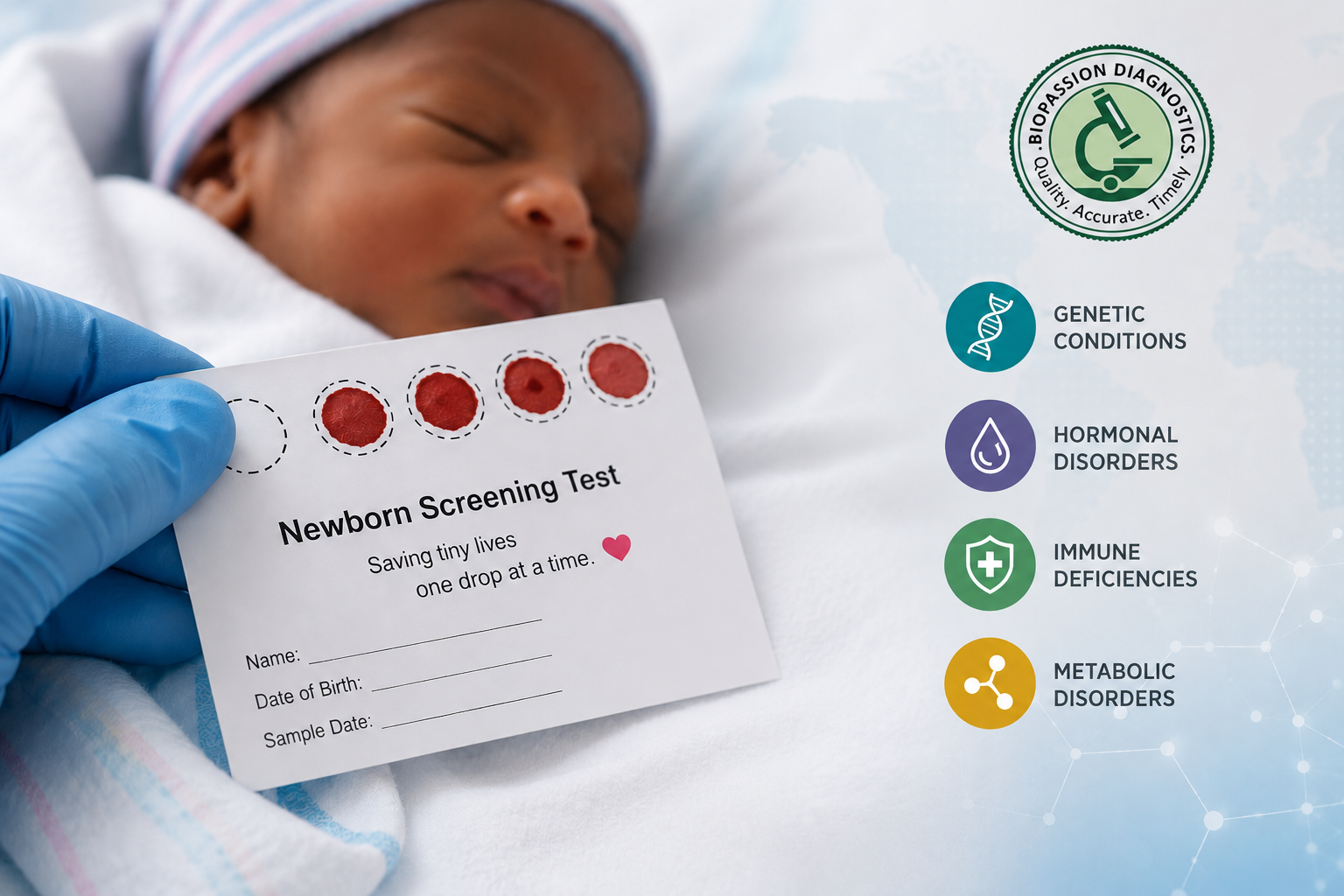
Every year, millions of newborns get a heel prick most parents forget by breakfast. It might be the most effective public health program you’ve never heard of.
Somewhere between the first cry and the first diaper change, something remarkable happens in nearly every hospital on Earth: a nurse pricks a newborn’s heel, collects a few drops of blood on a special card, and sends it off to a lab most parents will never think about again.
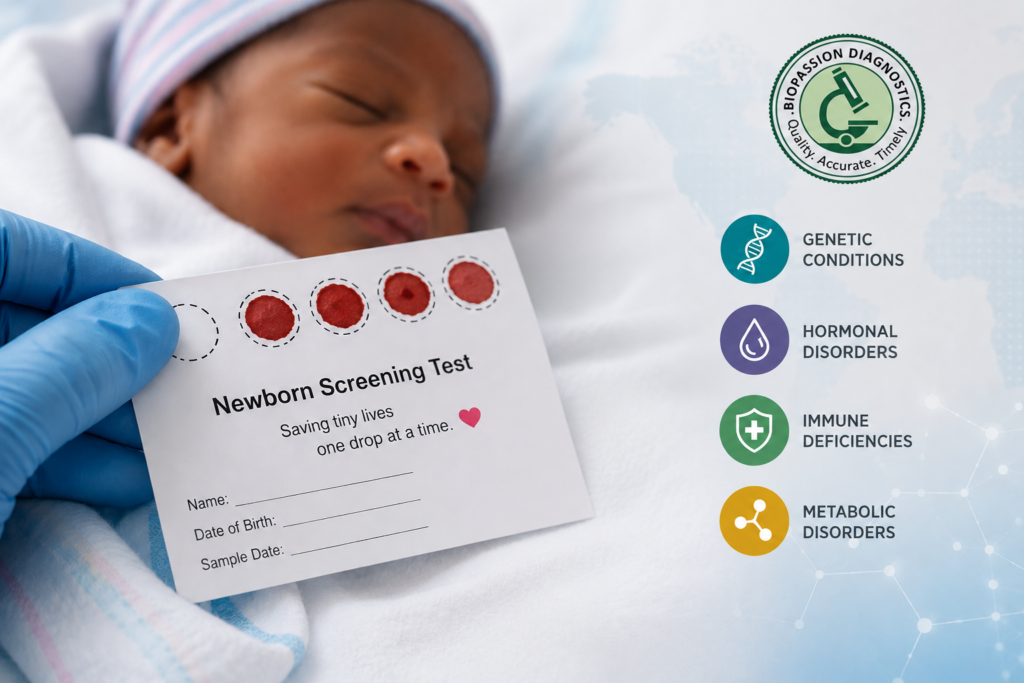
That card is one of modern medicine’s best-kept secrets.
called newborn screening, and it might be the single most effective public health program you’ve never heard of.
A few drops, dozens of answers
Newborn screening isn’t one test: it’s a panel, usually thirty to sixty conditions depending on where you live. From that single heel-prick sample, labs can flag metabolic disorders, hormonal imbalances, immune deficiencies, and genetic conditions, many of which show zero visible symptoms in the first days of life.
That’s the whole point. Conditions like phenylketonuria (PKU) or congenital hypothyroidism don’t announce themselves at birth. A baby with PKU looks completely healthy, until irreversible brain damage sets in over the following months because their body can’t process a specific amino acid. Catch it in the first week, though, and a simple dietary change is often all it takes for that same child to grow up with a perfectly typical life.
It finds trouble before trouble finds the baby.
From one state’s idea to a global standard
The program traces back to the 1960s, when microbiologist Robert Guthrie developed a cheap, simple bacterial-inhibition test to detect PKU using dried blood spots on filter paper, the same basic card format still used today. Massachusetts became the first place to mandate it, in 1963. What started as a test for a single rare disorder has since exploded into panels covering everything from sickle cell disease to cystic fibrosis to severe combined immunodeficiency, sometimes called “bubble boy disease.”
Today, some version of newborn screening exists across most industrialized countries, and expanding access to lower-income regions is a major focus of global child health efforts, because the underlying conditions don’t respect borders, even if screening infrastructure does.
Panel growth, roughly
1963 –1
PKU only, the original Guthrie test
1990s –10
Tandem mass spectrometry widens the net
Today – 30–60+
Metabolic, hormonal, immune & genetic conditions, panel size varies by country
Why this is genuinely cutting-edge medicine
It’s easy to assume a decades-old heel prick is old news, but the field is moving fast.
- Genomic sequencing is entering the panel. Pilot programs in the US, UK, and elsewhere are testing whether whole-genome or whole-exome sequencing at birth could eventually supplement the traditional biochemical panel, screening for hundreds of conditions instead of dozens.
- Gene therapies are changing the math. Conditions once untreatable, like spinal muscular atrophy, now have approved gene therapies, but they only work before symptoms appear. Screening isn’t just diagnostic anymore; it’s the trigger for a treatment window measured in weeks.
- AI is entering the lab. Machine learning models are being used to flag subtle patterns across metabolic markers that a human reviewing raw numbers might miss, especially for rare conditions with ambiguous signatures.
- Point-of-care testing is shrinking turnaround times, which matters enormously for conditions like SCID or critical congenital heart disease, where days genuinely change outcomes.
The part nobody talks about: it’s not perfect
For all its success, newborn screening has real tensions baked into it.
- False positives cause real distress. These are screening tests, not diagnostic ones. An abnormal result often triggers days of anxious follow-up before a family learns their baby is actually fine.
- What happens to the blood spot after? Many programs retain dried blood cards for years, sometimes indefinitely, for quality control or research, sparking genuine debate over consent, privacy, and who gets to use a newborn’s genetic material down the line.
- Access isn’t equal. Panel size varies by country and even by state or province, so a baby’s odds of having a treatable condition caught early can depend more on geography than biology.
- The genomic frontier raises hard questions. Do parents want to know about adult-onset conditions, or variants of uncertain significance, for a baby who can’t consent to that knowledge? Bioethicists are still working through it.
Newborn screening is, in a sense, a bet: that a few dollars and a few drops of blood on every baby is worth it to catch the rare few who need urgent intervention. It’s a bet that’s paid off spectacularly. Researchers routinely rank it among the most successful preventive medicine programs of the last century.