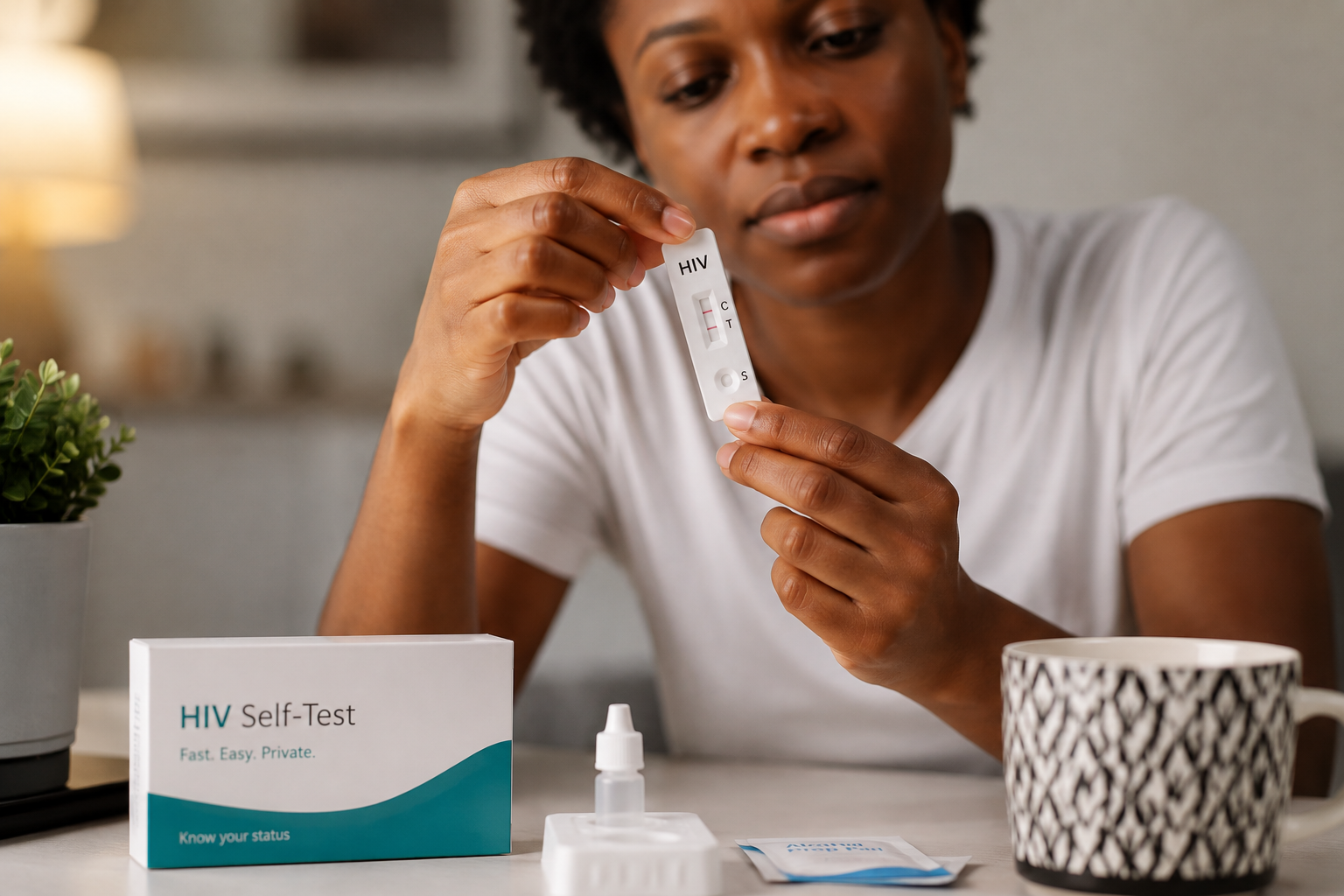
In 1985, an HIV test could take weeks to return a result, and when it did, there was very little medicine could offer beyond a grim prognosis. Today, a person can know their status in about a minute, from a self-administered kit bought at a pharmacy, with treatment options that let most people live a full, ordinary lifespan. Few areas of medicine have transformed as completely, or as quietly, as HIV testing.
It’s a story about a virus, yes, but it’s really a story about how testing technology, public health strategy, and the fight against stigma had to evolve together, because none of them worked without the other two.
Why Testing Was Always the Hard Part
HIV is unusual among infectious diseases in that the virus itself is often invisible for years. Someone can be infected, contagious, and feel completely fine for a decade before symptoms of advanced disease appear. That silent window is precisely what made testing, not treatment, the first major battleground.
Early tests looked for antibodies, the immune system’s response to the virus, which meant there was a lag between infection and a detectable result, sometimes weeks to months, known as the window period. That gap had real consequences: someone could test negative while already being infectious, creating a false sense of security at exactly the wrong moment.
Modern testing has spent the last three decades closing that window as tightly as possible.
The Generations of HIV Testing
Each leap in testing technology roughly maps to a shorter window period and a faster result, and it’s a genuinely impressive engineering story:
- First-generation tests (1980s) detected antibodies only, with a window period of up to three months and lab turnaround measured in days to weeks.
- Second- and third-generation tests improved antibody sensitivity and shortened the window to roughly three to four weeks.
- Fourth-generation tests, now standard in most clinical labs, detect both antibodies and a viral protein called p24 antigen, which appears earlier in infection, shrinking the window to about two to four weeks.
- Nucleic acid tests (NAT) look for the virus’s genetic material directly and can detect infection within seven to ten days, though they’re typically reserved for high-risk exposures or ambiguous cases rather than routine screening, since they’re more expensive and resource-intensive.
- Rapid point-of-care tests now deliver results in about twenty minutes using a finger prick or oral fluid swab, no lab required, making testing possible in community centers, mobile clinics, and pharmacies.
- At-home self-tests have compressed the entire process into something a person can do alone in their bathroom with a result in roughly twenty minutes, a shift that has meaningfully increased testing rates among people who might avoid a clinic altogether.
Testing Didn’t Just Get Faster, It Got Smarter
Speed is only part of the story. The bigger shift has been in how testing is delivered and who it reaches:
- Opt-out testing in many healthcare settings now offers HIV screening as a routine part of general bloodwork unless a patient declines, rather than requiring someone to specifically request it, which has substantially increased early diagnosis rates.
- Self-testing and mail-in kits have removed the biggest barrier for a lot of people: the discomfort of testing in person, especially in communities where stigma or privacy concerns kept people from clinics entirely.
- Combination testing strategies now often pair antibody or antigen tests with same-day linkage to care, so a positive result comes with an immediate next step instead of a referral slip and a waiting period.
- Community-based and pharmacy testing has pushed access far beyond traditional clinical settings, meeting people where they already are instead of requiring a dedicated appointment.
Undetectable Changed the Conversation Entirely
Testing technology tells only half the modern story. The other half is what happens after a positive result, and that’s where the picture has changed the most dramatically. Modern antiretroviral therapy can reduce viral load to levels so low that standard tests can’t detect it, and robust clinical research has established that a person with a sustained undetectable viral load cannot transmit HIV sexually. That principle, often summarized as Undetectable equals Untransmittable, or U=U, has reshaped both medical guidance and the emotional weight a diagnosis carries.
Testing and treatment have also become preventive tools in their own right. Pre-exposure prophylaxis, PrEP, taken by someone who is HIV-negative, dramatically reduces the risk of acquiring the virus, and its use depends on regular testing to confirm negative status and monitor for other infections. Regular testing has effectively become part of prevention, not just diagnosis.
Where the Technology Is Headed
A few developments are shaping what testing looks like next:
- Dual HIV and STI self-test kits are emerging, allowing a single sample to screen for multiple infections at once, reducing the number of separate tests someone needs to manage their sexual health.
- Digital health integration is connecting self-test results to telehealth platforms, so a positive result can trigger a virtual consultation and prescription within the same day, closing the gap between testing and treatment initiation.
- Long-acting prevention and treatment options, including injectable PrEP and treatment regimens dosed every few months instead of daily, are shifting the broader ecosystem testing supports, changing how often people need to engage with care.
- AI-assisted risk-based screening recommendations are being explored to help clinicians identify who might benefit from more frequent testing based on a broader set of health data, rather than relying solely on self-reported risk factors.
What Hasn’t Fully Caught Up
For all the technological progress, a few real gaps remain:
- Stigma still outpaces science in a lot of places. Even a twenty-minute, painless test can feel like an enormous barrier if someone fears judgment, disclosure, or the social consequences of a positive result.
- Access isn’t evenly distributed. Rapid and self-testing have expanded dramatically in higher-income settings, but cost and supply chains still limit availability in many parts of the world that carry the highest burden of the disease.
- The window period, while short, still exists. Someone testing very soon after a potential exposure may need a follow-up test to fully rule out infection, and that nuance doesn’t always come through clearly in consumer-facing marketing.
- A positive self-test still needs confirmation. Home tests are highly accurate but are generally considered preliminary, a confirmatory lab test is still the standard before starting treatment.
A Quiet Revolution
It’s easy to overlook how extraordinary this shift actually is. A test that once took weeks, carried enormous stigma, and delivered devastating news with few options now takes minutes, can be done privately at home, and, if positive, leads to treatment that lets people live essentially normal lives while making the virus untransmittable to partners.
HIV testing didn’t just get faster. It got woven into the fabric of routine healthcare, prevention, and personal autonomy in a way few diagnostic tools ever have. That’s not just a medical achievement, it’s a genuinely underappreciated public health success story still being written.